Show the Odds: What I Copy From Japanese Gacha
The reel was about a gachapon machine in Tokyo and the mobile games that copied it. You turn the handle, gacha, a capsule drops, pon, and you do not know what you got. Games turned that into a business. Then Japan had to ban one part of it, and the odds ended up on screen.
I build apps in Tokyo, and that last part is what I copy. This is the long version: what is actually a law, what is an industry rule, and how to show odds honestly in your own product, even if it has nothing to do with games.
Gachapon shows you the whole set
Look at the front of any machine before you put a coin in. The poster shows every prize in the capsule, how many kinds there are, and the price. The one I filmed says 全5種, five kinds, 400 yen, and the slot tells you it takes four coins.
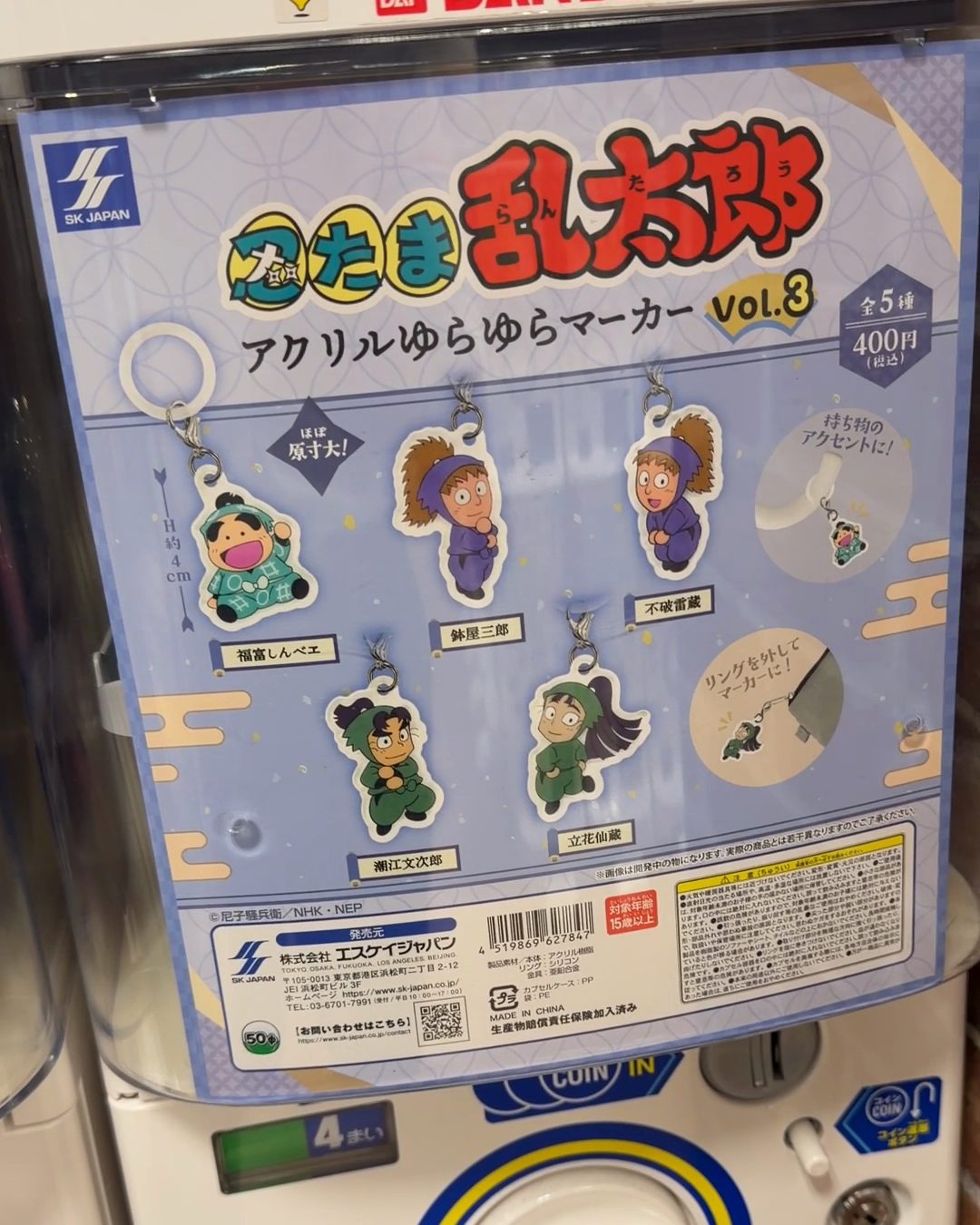
You still do not know which of the five you will get. That is the fun. But you know exactly what is inside and what it costs before you turn the handle.
The games copied it, then went further
Gacha games kept the capsule and dropped the poster. You pay, you pull, and you hope for the rare character.
Then came kompu gacha, short for complete gacha. Collect a full set of random items and you unlock an ultra rare one. Every pull toward the set costs money, and the last missing piece can take a lot of pulls. In May 2012 Japan's Consumer Affairs Agency said kompu gacha can fall under an old ban on card matching prizes in the Act against Unjustifiable Premiums and Misleading Representations (景品表示法), and it has been enforced since July 1, 2012. The agency's FAQ on card matching still says it is fully banned.
That ban covers one mechanic and says nothing about showing odds.
Who actually makes games show the odds
No Japanese law requires games to show their odds. The rules come from the industry and the app stores.
The Japan Online Game Association, JOGA, wrote its own guideline for paid gacha in 2012 and tightened it in 2016. Members list the items you can get, show the odds of rare items as a range or per rarity tier, and do not change the odds without notice. JOGA's safety declaration, last revised in 2026, commits members to that guideline. Trade press covered what the 2016 revision asks for. It is self regulation, and it only binds the companies that sign it.
The rule that reaches every app came from Apple. In December 2017 Apple added this to App Review Guideline 3.1.1: apps offering loot boxes or other mechanisms that provide randomized virtual items for purchase must disclose the odds of receiving each type of item to customers prior to purchase. Google Play has a matching rule, and it adds a detail I like: the odds must appear in advance of, and in close and timely proximity to, the purchase.
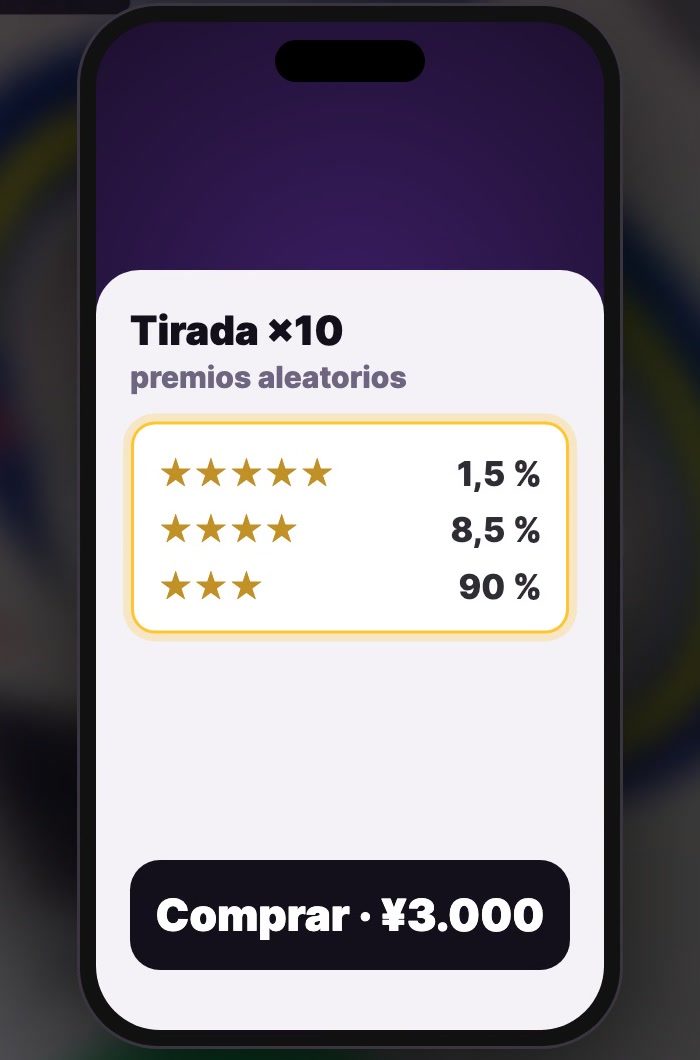
In design terms, the odds go on the purchase screen, right above the button. A help page three taps away does not count.
Tenjō puts a ceiling on bad luck
Many Japanese games also have tenjō, 天井, which means ceiling. After a set number of pulls you stop gambling and pick the prize you wanted. Players outside Japan call it a pity system.
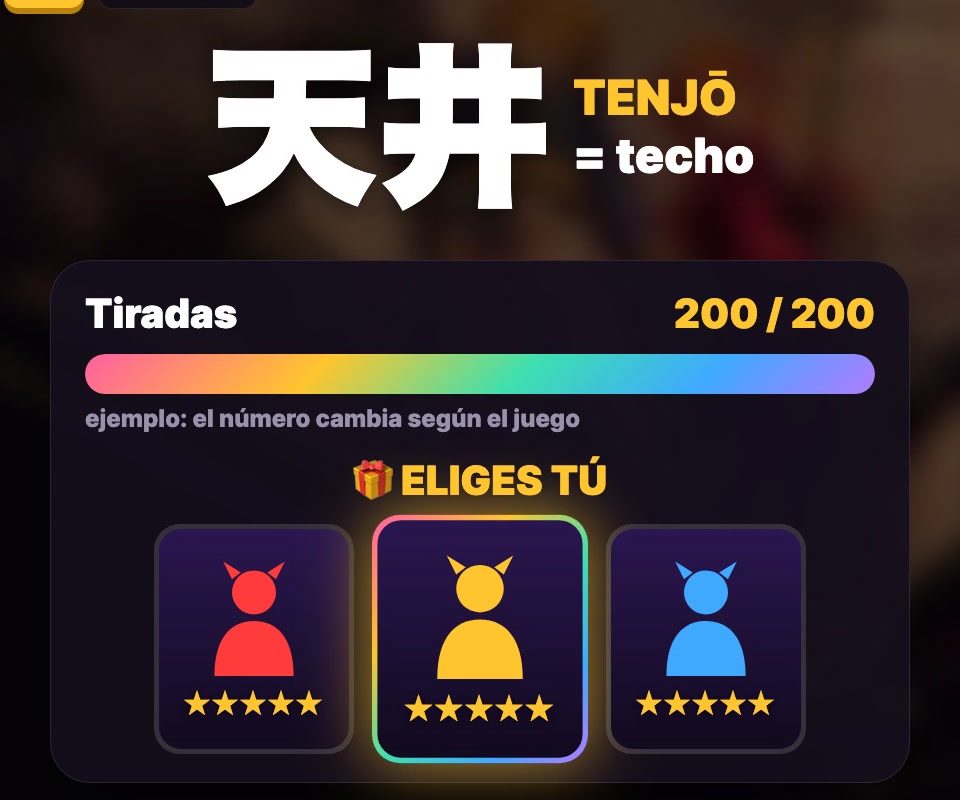
Odds tell you your chances and tenjō tells you the worst case, so the spend has a limit you can plan around.
How I show the odds in my own apps
Most products have some kind of draw in them, even when nobody calls it one. A referral raffle. A spin for a coupon. An AI answer that might be wrong. A waitlist. These are the patterns I took from gacha.
Put the number next to the action. If the odds live in the terms page, they are hidden. Show them on the screen where the person decides, before they tap.
Use numbers, not adjectives. Rare, lucky and exclusive mean nothing. Write 1.5%, and next to it, about 1 in 67. The second form is easier to picture.
Show the whole table. Include the boring outcome, the 90% that gets you the common prize. Hiding the likely result is how a fair draw starts to feel like a trick.
Answer the question people actually have. Nobody wants the chance per pull. They want to know their chance if they try ten times. That takes one line of code:
const atLeastOne = (p, n) => 1-(1-p)**n;

atLeastOne(0.015, 10);  // 0.14, about 14%
atLeastOne(0.015, 100); // 0.78, about 78%
Over 100 tries, 1.5% feels like a sure thing. It is 78%. That is the number to put on screen.
Show the ceiling and the progress toward it. If there is a guarantee, show a counter: 94 of 200. If there is no ceiling, say so plainly.
Do not change the odds quietly. JOGA members announce changes in advance. Do the same, and keep a log of what the odds were on each date.
The same idea outside games
AI confidence works the same way. If your model can be wrong, say when it is unsure, show where the answer came from, and give the person a way to check. Only show a percentage if you measured it against real outcomes. A made up 97% is worse than no number.
Waitlists too. Show the position, a range for the wait, like usually 3 to 5 days, and what can move you up. A spinner that says soon is the gacha with the poster ripped off.
Random rewards and giveaways get the full table: every prize, how many winners, the odds, the end date. Payments make it a legal question too, so if real money buys a random result, read your app store rules and talk to someone who knows the law where you sell.
My test before shipping any of this is simple. I design the odds screen first. If I would be embarrassed to show it, I change the odds, not the screen. If your monetization only works when people cannot see how it works, the problem is your product.